Healing at Home, Giving Back Globally with every new booking
Coming home after surgery or a hospital stay can be a relief. But navigating everyday life without the support of the hospital team close by can also feel scary.
Things that once felt automatic, like climbing the stairs or walking around the garden, may suddenly seem daunting. You might find yourself wondering: am I doing too much, or too little? How much exercise should I be doing?
You might be looking for help for yourself, or arranging support for someone you love. Either way, knowing what to expect can make that first appointment feel easier.
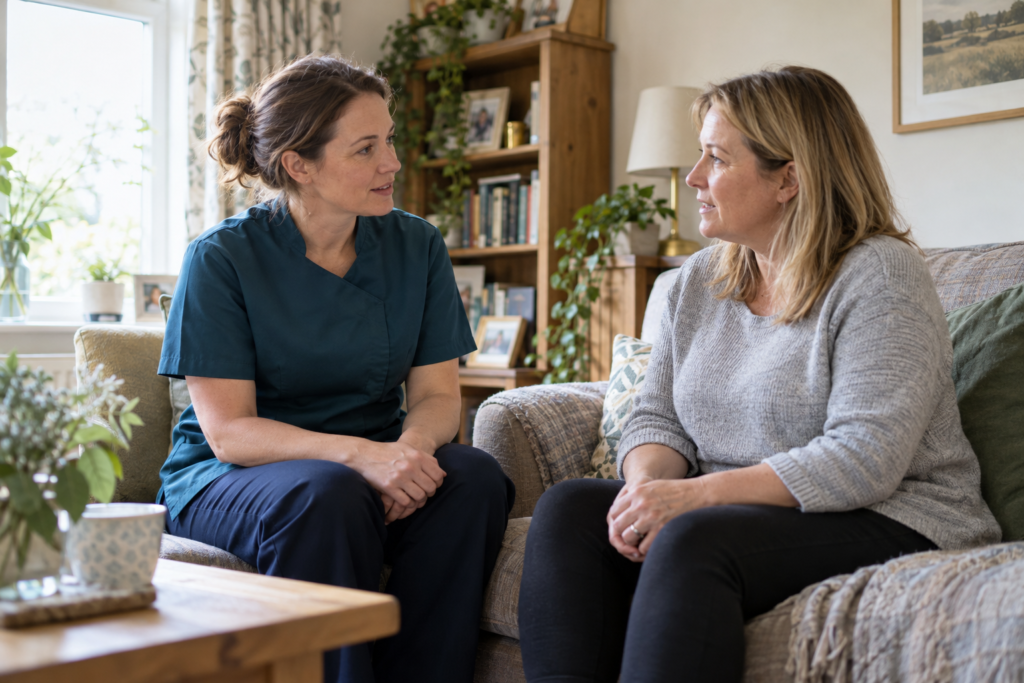
Home physiotherapy brings assessment and rehabilitation to you. At MoveWell at Home Physiotherapy, the first visit is about understanding what you are finding difficult, what matters to you and how to move forward with a practical recovery plan.
Who is home physiotherapy for?
Home physiotherapy can suit adults of different ages who need support with movement, strength or everyday activities. You do not have to be an older adult or completely housebound to enquire.
Reasons for seeking support include:
- Recovery after hip or knee replacement or other orthopaedic surgery.
- Rehabilitation after a fracture, injury or prolonged hospital stay.
- Returning to activity after hysterectomy or other abdominal surgery.
- Weakness or reduced mobility following illness.
- Balance difficulties or loss of confidence after a fall.
- Pain or mobility problems that make travelling to a clinic difficult.
The right approach depends on your condition, stage of recovery and any medical or surgical restrictions. If you are unsure whether home physiotherapy is suitable, we can discuss your needs before you book.
What happens during the first appointment?
1. We listen to your story
Your physiotherapist will ask about your symptoms, medical history, recent treatment and current difficulties. After surgery, this includes understanding the advice you received from your hospital team.
We also want to know what you hope to get back to. That might be walking to the local shop, managing stairs, returning to work or feeling confident enough to go out with your family.
There is no need to feel embarrassed about struggling with something that used to be easy. Your starting point helps us plan the right support.
2. We assess how you move
With your agreement, your physiotherapist will assess the movements relevant to your needs. This may include your strength, joint movement, balance, walking or ability to get up from a chair.
Assessment is adapted to what you can manage that day. You can ask questions, request a break or decline any part of it.
Being at home also lets us understand the practical challenges you face. For example, we may look at getting out of your usual chair or using the stairs, where appropriate. We will not ask you to attempt something that is unsuitable for your stage of recovery.
3. We agree meaningful goals
Recovery is easier to understand when the goals relate to your own life.
Instead of simply aiming to “get stronger”, your plan might focus on standing up from the sofa more easily, walking to the garden or managing the steps at your front door.
We will discuss what is realistic, what may take time and how progress can be reviewed. Recovery varies, so there is no fixed number of visits that suits everyone.
4. We start a personalised plan
Where appropriate, your first appointment includes treatment and practising exercises or everyday movements together.
Your plan may involve strengthening, balance practice, walking advice, pacing or guidance on using your existing walking aid. After surgery, rehabilitation should follow your surgical team’s instructions and any restrictions on movement or weight-bearing.
You should leave the appointment understanding what to practise, how often and what to do if you have difficulty. The aim is a manageable plan that fits your daily routine.

Do I need equipment or a large room?
You do not need a home gym. Many assessments and exercises can use an ordinary chair and a small clear area, depending on your needs.
Wear comfortable clothing that allows you to move. If you have them, keep your discharge summary, current medication list, hospital exercise sheet and walking aid nearby. These help your physiotherapist understand your care so far.
Tell us before the visit about access arrangements, steps or anything else that might affect the appointment. You do not need to tidy the whole house: we are there to support your recovery.
Can a family member be there?
Yes, if you would like them to be. With your consent, a relative or carer can join the discussion, help explain your concerns and learn how to support your rehabilitation.
If you are booking for someone else, involve them in the decision wherever possible. Their goals and preferences remain central to the appointment.
How do I book a MoveWell home visit?
Our initial home physiotherapy assessment lasts 60 minutes. It includes assessment, goal setting, appropriate initial treatment and a personalised rehabilitation plan.
If further appointments would be helpful, we will discuss the recommended approach and current costs with you. You can check the latest fees on our home visit and booking page.
Do I need a GP referral?
You can enquire or book a private MoveWell appointment without a GP referral.
If your symptoms need medical investigation or another service would be more appropriate, your physiotherapist will explain the next steps. Home physiotherapy can complement existing NHS care; it does not replace necessary medical review or your hospital team’s advice.
Home physiotherapy across Hampshire
For visits in Southampton, Fareham, Winchester, Chandler’s Ford, Romsey and surrounding areas, contact us with your postcode so we can confirm coverage and appointment availability.
Whether you are recovering from surgery, rebuilding strength after illness or supporting a relative after discharge, the first step is understanding what help you need.
Ready to feel more confident about your recovery?
Book a home physiotherapy assessment or send us an enquiry with your postcode and a brief description of what you are finding difficult.
You can also call 07971 340229 or email support@movewellathome.co.uk.
This article provides general information about home physiotherapy. Your rehabilitation should be tailored to your health, assessment findings and any advice from your treating team.
Further information
NHS: Physiotherapy explains assessment, treatment and accessing physiotherapy..